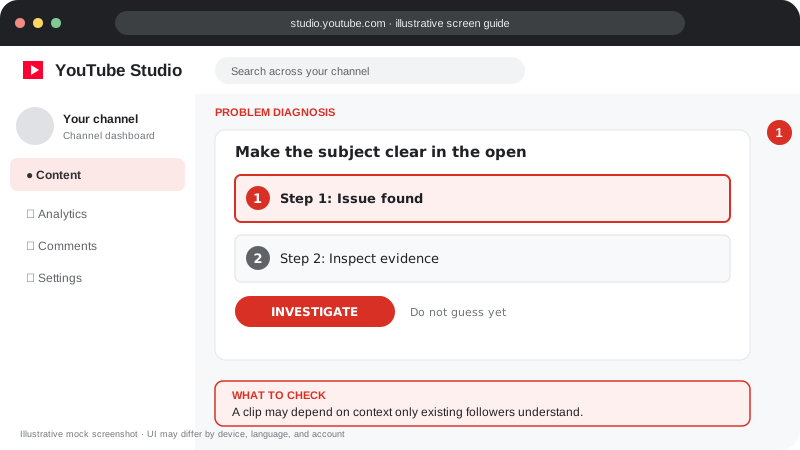
Problem screen
Shorts miss new viewers
A clip may depend on context only existing followers understand.
Clarify the topic and intended audience, then inspect whether viewers understand and keep watching the Short.
Clarify the topic and intended audience, then inspect whether viewers understand and keep watching the Short.
Follow the screen-style walkthrough below, then use the detailed checklist on this page. These are original illustrative mock screenshots—not copied official YouTube screenshots. Exact labels can vary by app version, device, language, and account.
A clip may depend on context only existing followers understand.
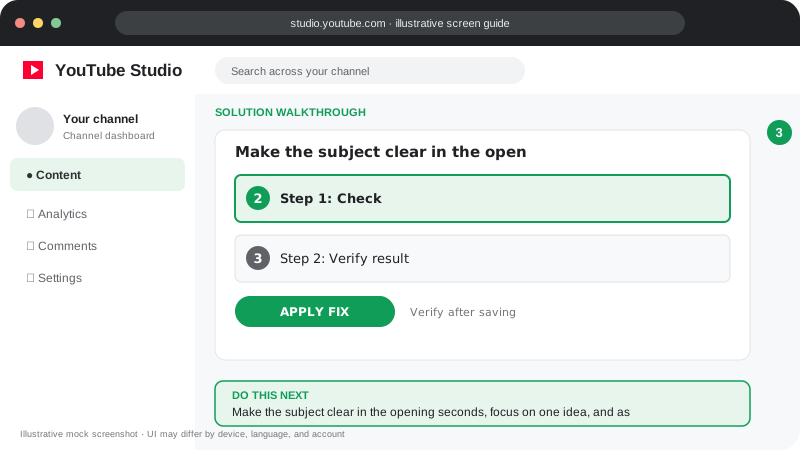
Make the subject clear in the opening seconds, focus on one idea, and assess viewer response rather than relying on hashtags.
Visuals are instructional mockups for learning, not live screenshots from your YouTube account. Confirm important settings in your own YouTube Studio.
Review traffic sources and new-versus-returning audience signals where available.
Make the first frame and opening line identify the subject quickly.
Keep each Short focused enough that a new viewer can understand it without channel history.
Use accurate titles and relevant context; avoid unrelated hashtags.
Compare similar Shorts and make one evidence-based improvement at a time.
No. Returning viewers are valuable too; balance discovery content with videos that serve your existing audience.
Practical guidance for creators in different countries, languages, and device environments. Menu labels can vary by YouTube Studio version; follow the notices shown on your own account.
Use available audience and traffic-source reports. A video may be serving existing viewers, searchers, or external audiences rather than broad Shorts-feed audiences.
Use clear visuals and language; avoid inside jokes that require prior channel knowledge unless that is the intended niche.
Review early drop-off and completion patterns where available. Improve clarity, pacing, captions, and payoff before blaming a hidden restriction.
Try a related question or audience need and compare results over several uploads. Keep the channel promise coherent without making every video identical.
No. Shorts can be recommended to viewers who do not subscribe, depending on relevance and viewer response.
No guaranteed cadence exists; quality, audience fit, and sustainable experimentation matter.
Official reference: Read YouTube Help for this topic ↗. Official rules and interface details may change; use the current page as the final authority.