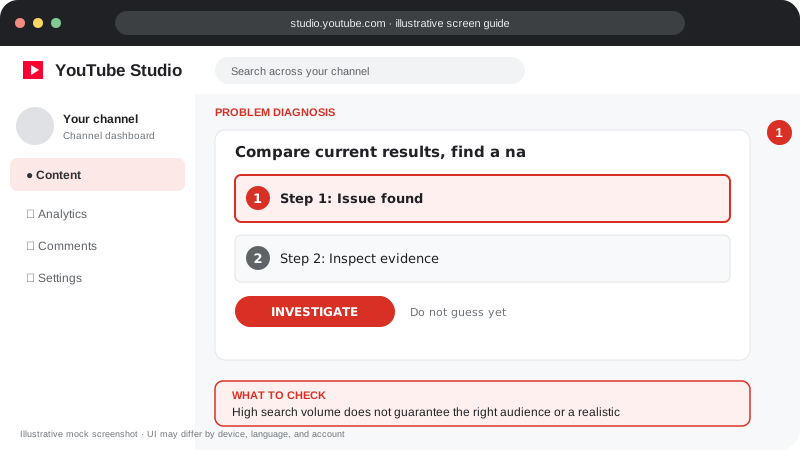
Problem screen
Keyword competition is unclear
High search volume does not guarantee the right audience or a realistic opportunity.
Look for specific questions where you can provide a better, clearer answer than the existing results.
Look for specific questions where you can provide a better, clearer answer than the existing results.
Follow the screen-style walkthrough below, then use the detailed checklist on this page. These are original illustrative mock screenshots—not copied official YouTube screenshots. Exact labels can vary by app version, device, language, and account.
High search volume does not guarantee the right audience or a realistic opportunity.
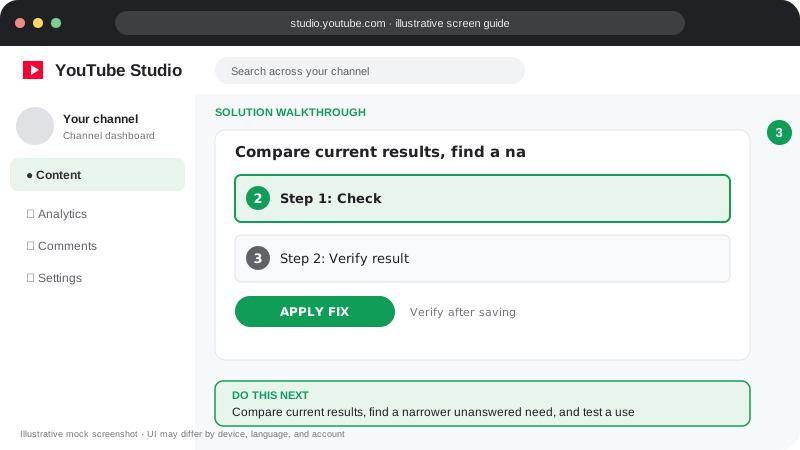
Compare current results, find a narrower unanswered need, and test a useful specific topic rather than relying on a score alone.
Visuals are instructional mockups for learning, not live screenshots from your YouTube account. Confirm important settings in your own YouTube Studio.
Start with a narrow audience and problem rather than a broad one-word topic.
Use search suggestions to discover longer, more specific phrases.
Review current results: are they outdated, unclear, too advanced or missing a key step?
Choose a phrase that fits your expertise and the video you can deliver.
Measure search traffic and viewer satisfaction after publishing.
No. They may be easier to address precisely, but demand and viewer response still matter.
Practical guidance for creators in different countries, languages, and device environments. Menu labels can vary by YouTube Studio version; follow the notices shown on your own account.
Combine a subject with a specific task, skill level, device, version, region, or error message only when it is genuinely relevant.
Look at the top results for freshness, accuracy, production quality, unanswered questions, and whether they truly solve the query. A low result count does not automatically mean low competition.
Read public comments and FAQs to identify missing steps, edge cases, or explanations. Create a better answer, not a copy of existing videos.
Use Analytics to review search terms, impressions, CTR, and watch time. Keep a note of what changed and avoid treating any third-party difficulty score as an official metric.
No. Audience demand, relevance, quality, competition, and timing still matter.
No. Mismatched traffic is unlikely to satisfy viewers and can undermine trust.
Official reference: Read YouTube Help for this topic ↗. Official rules and interface details may change; use the current page as the final authority.