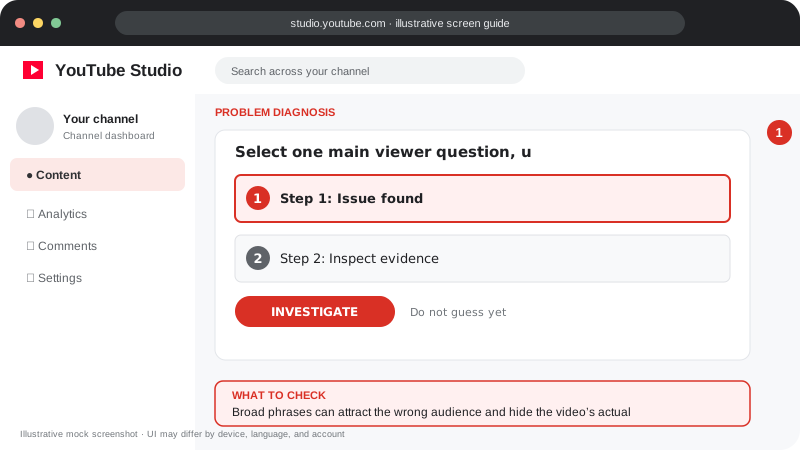
Problem screen
Keyword targeting is weak
Broad phrases can attract the wrong audience and hide the video’s actual value.
Choose phrases that match a real viewer question and the video you can actually make.
Choose phrases that match a real viewer question and the video you can actually make.
Follow the screen-style walkthrough below, then use the detailed checklist on this page. These are original illustrative mock screenshots—not copied official YouTube screenshots. Exact labels can vary by app version, device, language, and account.
Broad phrases can attract the wrong audience and hide the video’s actual value.
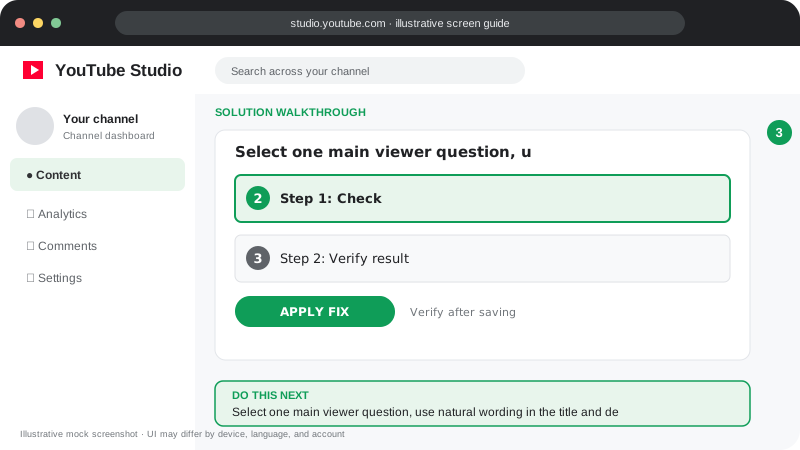
Select one main viewer question, use natural wording in the title and description, and make sure the content answers it.
Visuals are instructional mockups for learning, not live screenshots from your YouTube account. Confirm important settings in your own YouTube Studio.
Write down the problem your intended viewer wants solved.
Look at YouTube search suggestions and related videos for wording and intent.
Prefer specific phrases when they describe your video more accurately than broad terms.
Use the main phrase naturally in the title and description.
Review actual Search traffic and refine future topics using evidence.
Use them naturally in a clear title, description and the spoken/on-screen content where appropriate.
Practical guidance for creators in different countries, languages, and device environments. Menu labels can vary by YouTube Studio version; follow the notices shown on your own account.
List the problem, audience, tool or product, location if relevant, and intended outcome. Check autocomplete and Studio Trends; validate that the search intent matches the video you can make.
A focused query such as a device + error message + fix can be more actionable than a broad word like “YouTube.” Do not invent search-volume numbers when you have no reliable data.
Put the main idea in a clear title and first description lines. Add synonyms only where they help a human understand the topic.
After publication, review YouTube Search terms in Analytics where data is available. Build follow-up content around genuine audience needs rather than chasing every trend.
Choose one main intent and a small set of closely related concepts. There is no magic keyword count.
No. Treat them as estimates from that provider, not as YouTube ranking factors or guaranteed search volume.
Official reference: Read YouTube Help for this topic ↗. Official rules and interface details may change; use the current page as the final authority.